Understanding Fresh Fish
Fresh fish is seafood that has recently been caught and is still ideal for consumption. The U.S. Food and Drug Administration (FDA) defines fresh fish as fish that has been chilled to a temperature of 32°F or lower and is sold for consumption as soon as possible after being caught.
Key Indicators of Fresh Fish
To recognize fresh fish, it’s essential to know several indicators that set it apart from frozen or older options. Fresh fish may also refer to fish that is still alive or has just recently been harvested. Whether seeking fresh fish or the designated catch of the day, understanding its definition helps you make informed choices when dining or shopping.
Importance of Freshness
Freshness is crucial for both health and flavor. Newly caught fish tends to taste better, has an improved texture, and boasts higher nutritional value compared to older fish.
Health Advantages
Eating fresh fish provides significant health benefits:
- Omega-3 fatty acids: Essential for promoting heart health.
- High-quality protein: Vital for muscle maintenance.
- Essential vitamins and minerals: Including vitamin D and B2.
Consuming fresh fish can also help you avoid foodborne illnesses that may arise from spoiled seafood. These factors underscore why sourcing fresh fish is fundamental for both health and culinary enjoyment, which is a priority at Blue Sky Bistro.
How to Identify Fresh Fish
Identifying fresh fish involves several sensory tests. Here are some effective methods:
Visual and Textural Cues
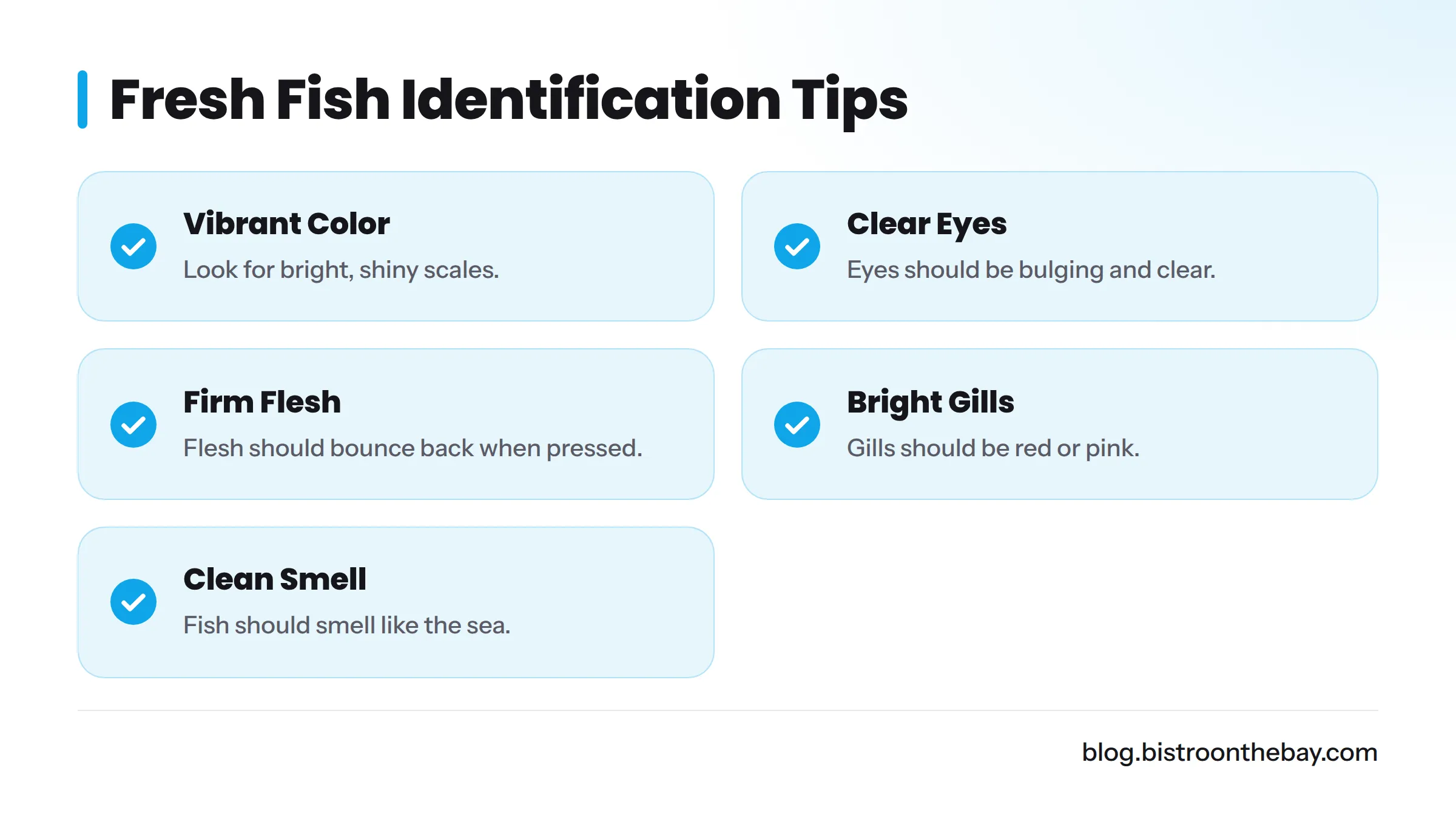
- Color: Fresh fish usually has a vibrant, clear appearance. Look for bright, shiny scales.
- Eyes: They should be clear and bulging, not cloudy or sunken.
- Flesh: Fresh fish has firm flesh that bounces back when pressed; soft or mushy flesh indicates older fish.
- Gills: Should be bright red or pink, indicating freshness.
Smell and Taste Tests
- Smell: Fresh fish should smell like the sea - avoid fish with sour or ammonia-like odors.
- Taste: At a restaurant, consider asking for a small taste. Fresh fish will present a clean flavor profile, devoid of any off-putting aftertastes.
Sourcing Fresh Fish at Blue Sky Bistro
At Blue Sky Bistro, we take pride in sourcing high-quality seafood from local suppliers who adhere to sustainable practices. By working closely with trusted fisheries along the Central Coast, we guarantee that only the freshest fish makes it to your plate.
Local Suppliers and Standards
We collaborate with local fishermen who rigorously maintain standards that ensure seafood freshness and quality. This commitment supports local economies and helps protect marine ecosystems. When dining at Blue Sky Bistro, you can trust that you’re enjoying the freshest catch available.
Chef Handling Practices for Fresh Fish
Our chefs at Blue Sky Bistro follow best practices for handling and preparing seafood, ensuring its freshness:
Kitchen Practices
- Storage: Fish is kept at optimal temperatures.
- Preparation: Handled carefully to prevent bruising, which can compromise quality.
- Cooking: We employ techniques that preserve flavor and texture, so you enjoy the fish at its finest.
Frequently Asked Questions about Fresh Fish
- What does fresh fish mean? Fresh fish refers to seafood that has recently been caught and not frozen.
- How can I tell if fish is fresh? Look for clear eyes, bright gills, and firm flesh.
- Why is freshness essential in seafood? It impacts taste, nutritional value, and safety.
- What are the signs of freshness in fish? Look for bright color, clear eyes, and a mild smell.
- Is fresh fish better than frozen? Generally, yes; it provides superior taste and nutrition.
- How is fish sourced at Blue Sky Bistro? We source from local suppliers committed to sustainability.
- What practices ensure seafood freshness in restaurants? Proper storage, careful handling, and cooking techniques are essential.
- Can I trust what restaurants say about their fish? Inquire about sourcing and freshness indicators.
- What local fish options are available in Morro Bay? Varieties include halibut, salmon, and rock cod.
- How should fresh fish smell? It should smell oceanic, not fishy or sour.
- What cooking methods retain fish freshness? Grilling and baking are excellent choices.
- Why does local sourcing matter for seafood? It supports community businesses and ensures freshness.
- What do chefs look for in fresh fish? Size, smell, and appearance are key factors.
- Are there health benefits to eating fresh fish? Yes, it’s rich in omega-3s and essential nutrients.
- How does Blue Sky Bistro ensure quality seafood? Through responsible sourcing and careful handling.
- What’s the best way to store fresh fish at home? Keep it refrigerated and consume within 2 days.
- How often should seafood be consumed? Two to three times a week is recommended.
- What’s the difference between wild-caught and farmed fish? Wild-caught is generally fresher with better flavor.
- What questions should I ask about seafood at restaurants? Inquire about sourcing and freshness indicators.
- How can I learn more about seafood sustainability? Research local fisheries and sustainable practices.
Prioritizing fresh fish helps diners enjoy an exceptional experience in terms of flavor and health. Consider visiting Blue Sky Bistro to savor local seafood while understanding exactly where your meal comes from.
Related: best seafood in Morro Bay