What is Sablefish?
Sablefish, known scientifically as Anoplopoma fimbria, thrives in the frigid waters of the Pacific Ocean. Commonly referred to as black cod, this fish is celebrated for its high fat content and buttery texture, making it a top choice for chefs and culinary enthusiasts. Its deep, dark coloration and fine grain distinguish it from other fish, offering a unique culinary experience.
Taste Profile of Sablefish
Sablefish features a rich, buttery flavor that many describe as silky. This profile makes it highly versatile in the kitchen, pairing well with robust seasonings like miso, or lighter flavors that allow its natural taste to shine. While it shares a resemblance with traditional cod, sablefish delivers a more luxurious mouthfeel, enhancing its culinary appeal.
Texture of Sablefish
Cooked sablefish reveals a flaky yet tender texture that virtually melts in your mouth. With a fat content typically between 15%-20%, it remains remarkably moist, offering a satisfying experience distinctly different from leaner fish varieties. This makes sablefish an excellent choice for various dishes.
Nutritional Benefits of Sablefish
Beyond its delectable taste, sablefish boasts impressive nutritional benefits:
- Omega-3 Fatty Acids: High in omega-3s, essential for heart health and brain function, aiding in inflammation reduction.
- Protein: A potent source of high-quality protein crucial for muscle repair and general health.
- Vitamins and Minerals: Abundant in vitamins B12 and D, selenium, and phosphorus, supporting metabolic functions and bone health.
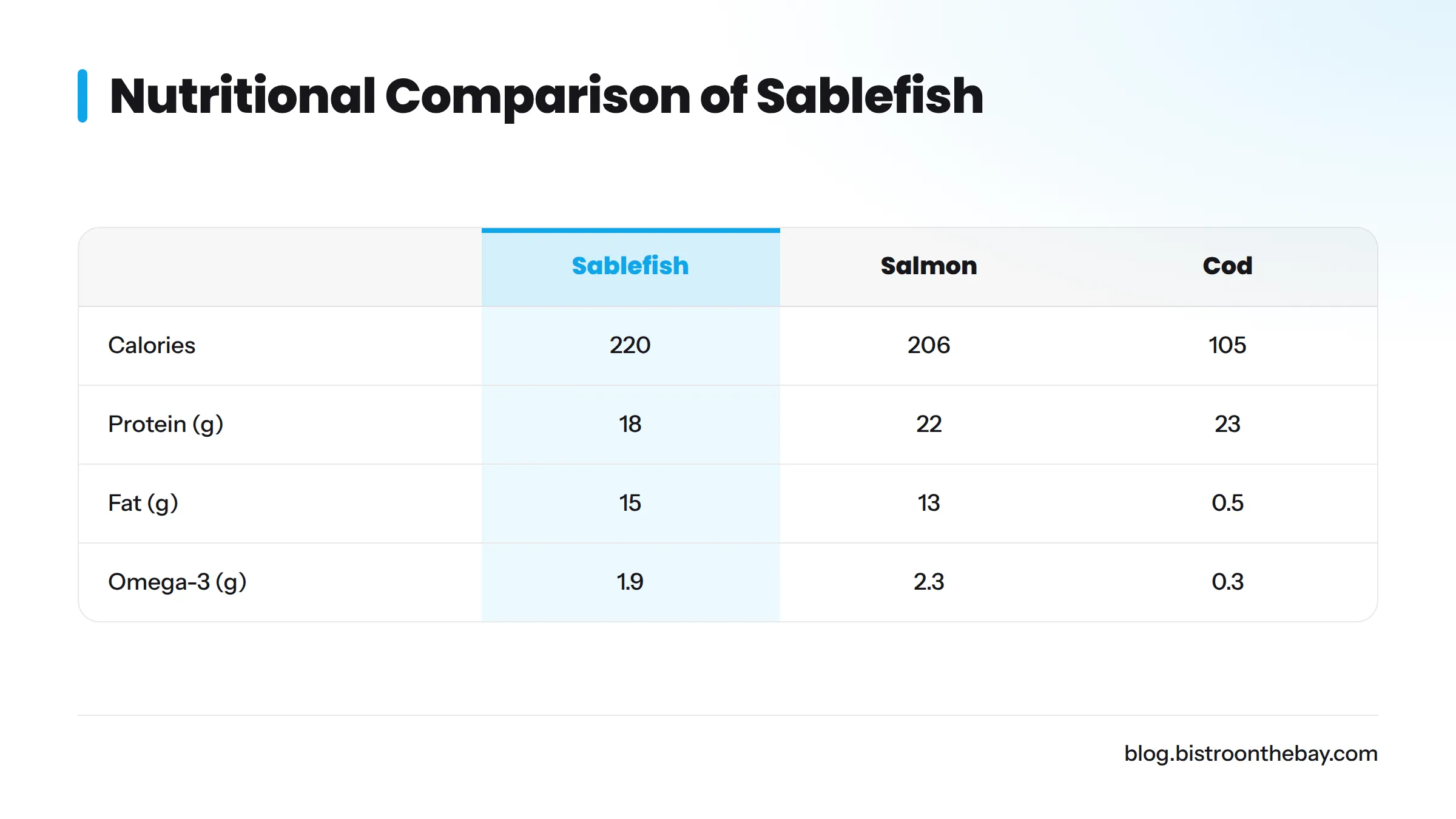
Nutritional Comparison of Sablefish to Other Fish
| Nutrient | Sablefish (per 100g) | Salmon (per 100g) | Cod (per 100g) |
|---|---|---|---|
| Calories | 220 | 206 | 105 |
| Protein (g) | 18 | 22 | 23 |
| Fat (g) | 15 | 13 | 0.5 |
| Omega-3 (g) | 1.9 | 2.3 | 0.3 |
Best Cooking Methods for Sablefish
There are numerous ways to prepare sablefish to highlight its rich flavors:
- Grilling: This method imparts a lovely smokiness that marries well with its natural taste.
- Baking: Offers even cooking while locking in moisture.
- Searing: A quick sear at high heat forms a crispy exterior while keeping the inside rich and tender.
- Smoking: Enhances the smoky flavor with an additional layer of richness.
How Our Kitchen Prepares Sablefish
At Blue Sky Bistro, we're known for our unique methods of preparation:
- Miso Glazed: A savory miso glaze enhances the fish's buttery profile.
- Served with Seasonal Vegetables: Fresh, local vegetables paired with sablefish emphasize seasonal produce.
- Suggestions for Pairing: We recommend a light white wine, like Sauvignon Blanc, which harmonizes beautifully with its rich flavor.
How to Order Sablefish
If you're eager to try sablefish, it often appears on seafood menus under its common name, black cod. Seek reputable seafood restaurants, such as Blue Sky Bistro, known for their quality seafood and commitment to sustainable sourcing.
Common FAQs about Sablefish
- Is sablefish healthy to eat? Yes, it is rich in omega-3 fatty acids, protein, and essential vitamins.
- What are common recipes for sablefish? Popular choices include miso black cod, grilled sablefish, and roasted sablefish with herbs.
- Can I grill sablefish? Yes, grilling accentuates its flavor profile and adds a delightful char.
- Why is sablefish also called black cod? The name reflects its dark coloration, although it is not a true cod species.
- How should I store sablefish? Refrigerate it and consume within two days for optimal flavor, or freeze for longer storage.
For more insights on wine pairings with seafood and exploring various cooking techniques, visit our article on pairing wine with seafood.
Elevate your dining experience with the delightful flavors of sablefish, and feel free to ask our chefs at Blue Sky Bistro for their cooking tips or recommendations!
Sources
- Sablefish - Wikipedia
- Sablefish | NOAA Fisheries
- What is sablefish or black cod and how to cook it
- Miso Black Cod Recipe | Sitka Seafood Market
Related: lingcod, another Pacific fish