What Is Hamachi?
Hamachi, commonly known as Japanese amberjack, belongs to the Seriola genus. Widely used in Japanese cuisine, especially in dishes like sashimi and sushi, this fish is appreciated for its rich flavor and buttery texture. The term "hamachi" typically refers to the fish at its juvenile stage, while older specimens are often called buri. Its mild sweetness makes it a favorite among seafood enthusiasts.
Definition and Species
Hamachi thrives in the warmer waters of the Pacific and plays a vital role in Japanese culinary traditions. Scientifically named Seriola quinqueradiata, hamachi can be found in both farmed and wild-caught varieties, highlighting its versatility across various dishes.
Taste Profile of Hamachi
Flavor and Texture Analysis
Hamachi offers a buttery, slightly sweet flavor profile. Its tender, smooth texture makes it an excellent choice for sashimi and sushi. The fish features nice marbling, which enhances its luxurious mouthfeel. Unlike more robust fish, hamachi has a subtle flavor that complements different garnishes and sauces.
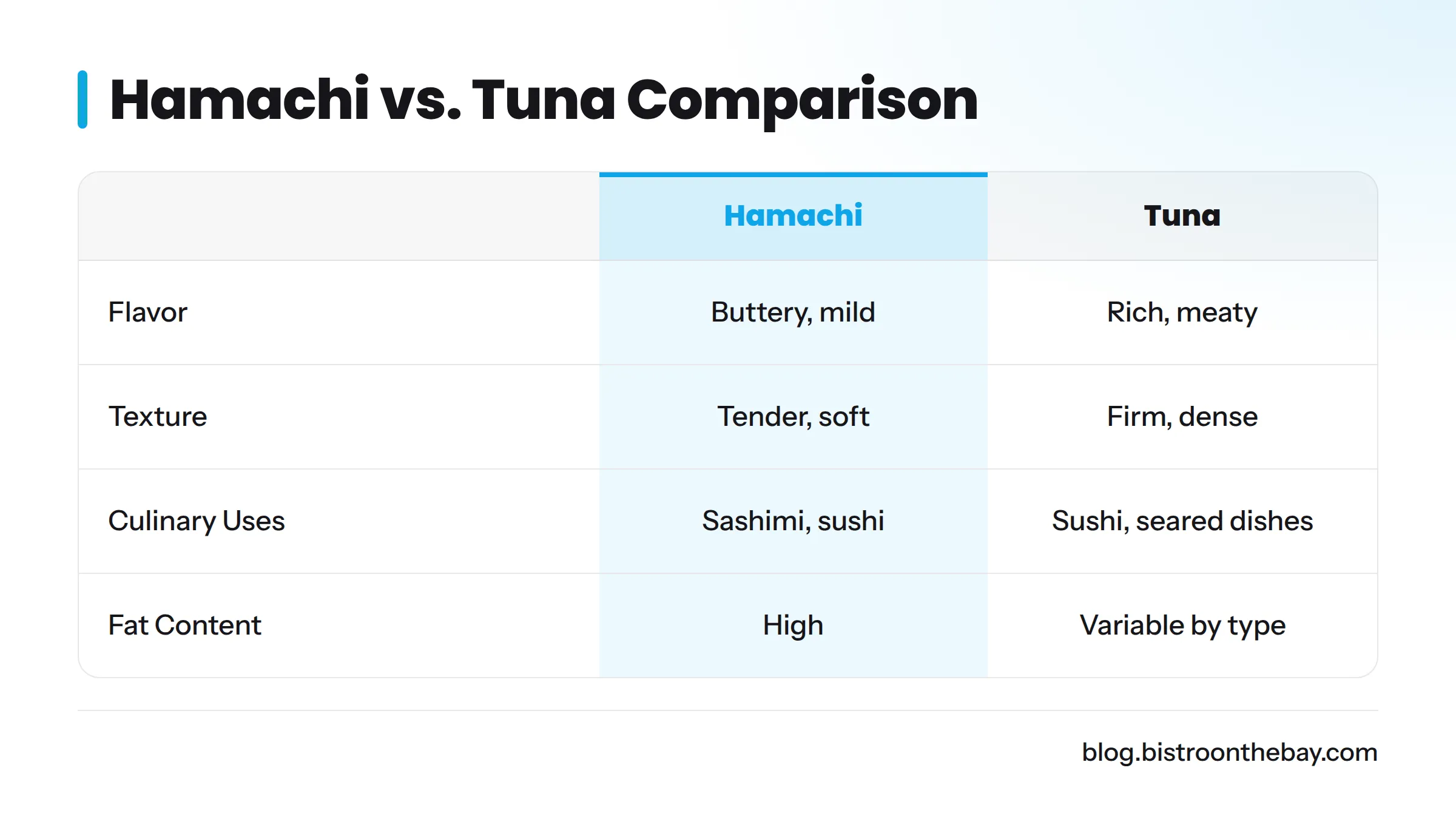
Comparison: Hamachi vs. Tuna
When comparing hamachi to tuna, several distinct differences emerge:
| Feature | Hamachi | Tuna |
|---|---|---|
| Flavor | Buttery, mild | Rich, meaty |
| Texture | Tender, soft | Firm, dense |
| Culinary Uses | Sashimi, sushi | Sushi, seared dishes |
| Fat Content | High | Variable by type (e.g., ahi tuna has less fat) |
Culinary Uses of Hamachi
Sushi and Sashimi Preparations
Hamachi is celebrated primarily in sushi and sashimi. The fish is thinly sliced and served raw, often accompanied by wasabi, soy sauce, or ponzu. Sushi chefs may create hamachi rolls incorporating ingredients like avocado, cucumber, or spicy tuna for added flavor.
Other Cooking Methods (Grilled, Baked)
While hamachi is commonly enjoyed raw, it can also be grilled or baked. Grilling adds a delightful char while keeping the fish moist. Dishes like grilled hamachi collar are popular, offering a tasty twist on traditional preparations. Baked hamachi can be seasoned with herbs and paired with vegetables for a satisfying meal.
How to Order Hamachi
Dining Tips and Pairings
When ordering hamachi, inquire about fresh or specific preparations. Restaurants typically offer it as sashimi, in sushi rolls, or as part of an appetizer. Pairing hamachi with a crisp white wine or refreshing sake can elevate the dining experience.
Common Garnishes and Sauces
Popular garnishes for hamachi include:
- Shredded daikon radish
- Scallions
- Fresh herbs
- Ponzu sauce
- Soy sauce
These accompaniments enhance the dish by offering contrasting flavors and textures.
FAQ Section
What is hamachi?
Hamachi is a type of Japanese amberjack, celebrated for its rich flavor and primarily used in sushi and sashimi.
How does hamachi compare to tuna?
Hamachi has a buttery, mild flavor, while tuna generally has a richer, meatier taste.
What is the best way to enjoy hamachi?
The ideal way to enjoy hamachi is as sashimi; however, it can also be grilled or baked for variety.
Is hamachi healthy to eat?
Yes, hamachi is a nutritious seafood option, rich in omega-3 fatty acids and protein, making it both healthy and delicious.
How can I tell if hamachi is fresh?
Fresh hamachi should emit a clean, ocean-like aroma, and its flesh should look shiny and firm.
What regions are known for producing hamachi?
Hamachi is primarily produced in Japan but is also farmed in other Pacific regions and along the coasts of California.
What is the history of hamachi in Japanese cuisine?
Hamachi has long been valued in Japanese culinary traditions and is often featured during celebrations and special occasions.
For deeper seafood insights, explore our articles on ahi tuna and seafood pairings.
Whether raw or cooked, hamachi promises a delightful dining experience that seafood lovers won’t want to miss.