What is Ahi Tuna?
Ahi tuna, commonly known as yellowfin tuna, is a favored fish in Hawaiian cuisine and sushi preparations. It’s celebrated for its rich flavor and firm texture, distinguishing it from other tuna varieties. Ahi tuna is versatile, lending itself to various dishes from sashimi to grilled steaks, and is a staple in seafood restaurants and sushi bars worldwide.
Taste Profile of Ahi Tuna
Ahi tuna has a mildly sweet taste with a pronounced ocean flavor. Its texture is firm yet buttery, making it perfect for quick cooking methods like searing. Typically enjoyed rare or medium-rare, this preparation highlights its natural flavors and tenderness. Enthusiasts often prefer ahi tuna over other types, like albacore and bluefin, due to its unique taste.
Grades of Ahi Tuna
Ahi tuna is categorized into several grades based on size, fat content, and freshness:
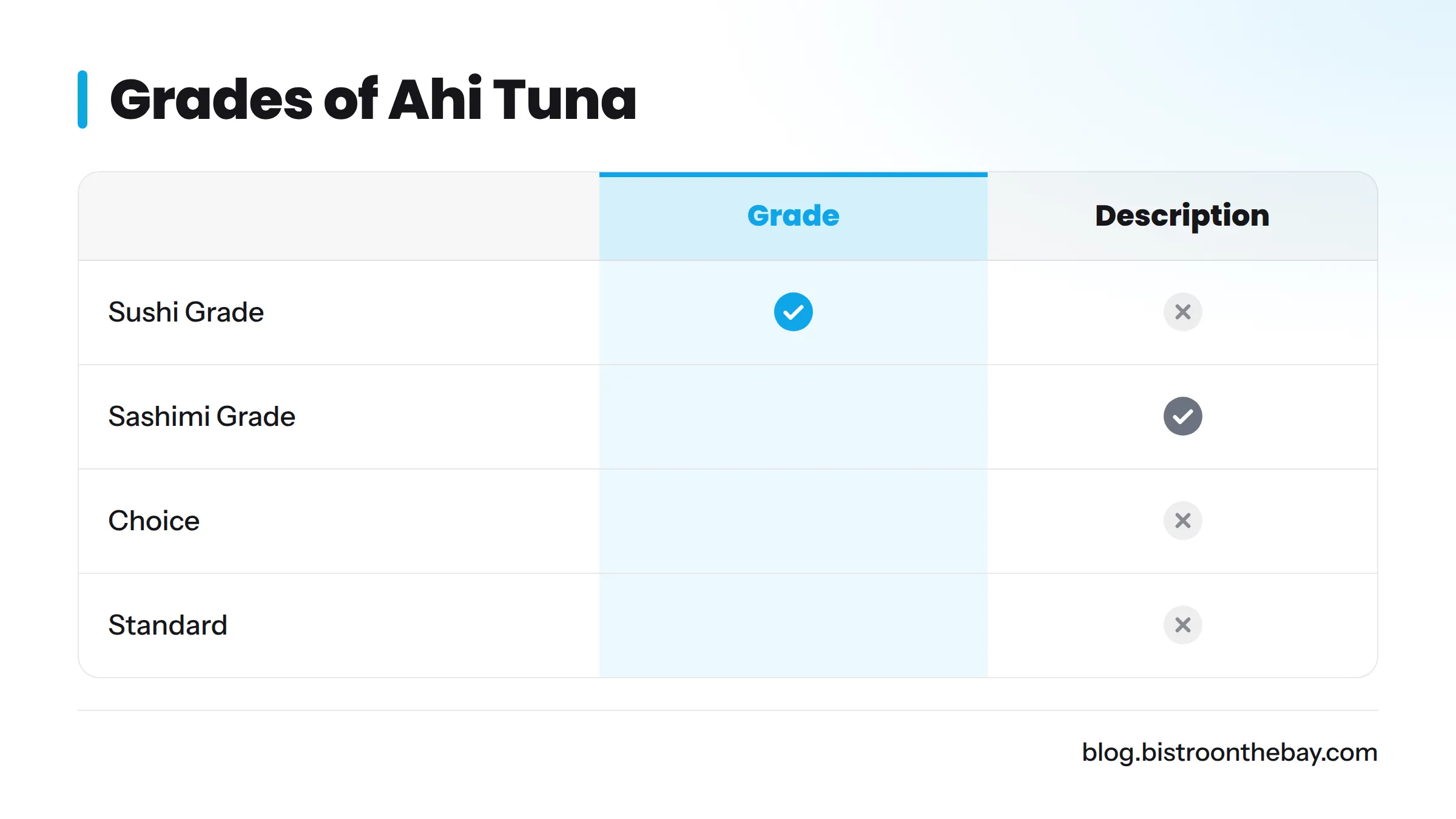
| Grade | Description |
|---|---|
| Sushi Grade | Highest quality, suitable for raw preparations like sashimi. |
| Sashimi Grade | Very fresh and safe to eat raw, commonly served in sushi restaurants. |
| Choice | Good quality but may have minor imperfections; ideal for cooking methods like searing. |
| Standard | Lower quality, typically used in canned or processed forms. |
For optimal flavor and freshness, choose sushi or sashimi grade when purchasing ahi tuna.
Serving Styles for Ahi Tuna
Ahi tuna can be enjoyed in various forms:
- Sashimi: Thinly sliced raw fish served with soy sauce and wasabi.
- Seared Ahi Tuna: Cooked quickly at high temperatures, leaving the center rare. This is often served with dipping sauces.
- Poke: A traditional Hawaiian dish featuring cubed ahi tuna marinated in soy sauce, sesame oil, and spices.
- Grilled: Typically served as steaks, infused with herbs and spices that add a delightful smoky flavor.
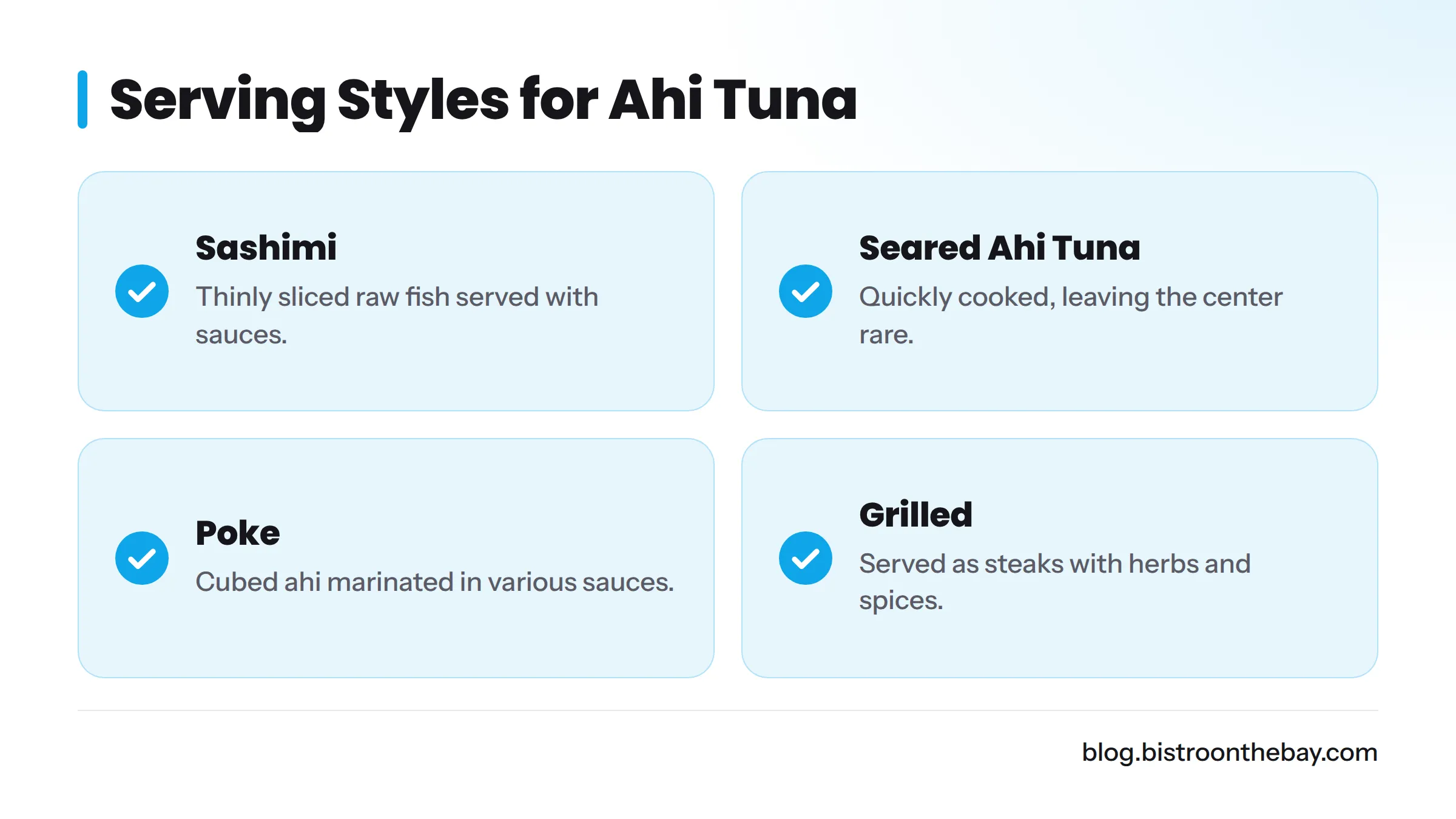
These preparations emphasize ahi tuna's unique taste and texture.
Safety Basics for Ahi Tuna
Handling ahi tuna safely is crucial:
- Storage: Always keep tuna refrigerated or frozen. Consume raw preparations (like sashimi) within 24 hours of purchase.
- Sourcing: Look for sushi-grade ahi tuna to ensure safety when consuming raw. Consult reliable sources like the FDA Seafood Safety for guidelines.
- Preparation: Thaw frozen tuna in the refrigerator, not at room temperature, to prevent bacterial growth.
Understanding these safety protocols allows you to enjoy ahi tuna with confidence.
FAQs
What is the best way to prepare ahi tuna?
The most popular methods include searing, grilling, or enjoying raw as sashimi or in poke.
How can you tell if ahi tuna is fresh?
Fresh ahi tuna should show bright coloration, a firm texture, and a fresh ocean aroma.
Is it safe to eat raw ahi tuna?
Yes, it is safe to consume raw if sourced as sushi-grade and handled correctly.
Where can I find ahi tuna near me?
Local seafood markets, sushi restaurants, and grocery stores with seafood sections typically carry ahi tuna.
What dishes can I make with ahi tuna?
Dishes include sashimi, poke bowls, seared tuna steaks, and tuna tartare.
Explore the versatility of ahi tuna - consider trying a delicious dish today!
For expert cooking tips and recipes featuring ahi tuna, visit the Blue Sky Bistro menu for more information.
Source Citations
- FDA Seafood Safety
- NOAA Guidelines on Tuna Consumption
- About Ahi Tuna
- Comparative Tuna Analysis on YouTube
- Nutritional Information on Ahi Tuna
Explore more about seafood options and discover how to prepare these delightful dishes through the various culinary resources at Blue Sky Bistro.
Related: hamachi