Exploring Abalone: A Prized Seafood Delicacy
Abalone is a marine mollusk from the Haliotidae family. Recognized for its spiral, shell-like structure and vibrant colors, this sea snail thrives in warmer coastal waters. Its unique ability to cling to rocky surfaces enhances its presence in natural habitats. Particularly sought after for its tender and flavorful meat, abalone is a delicacy in many cuisines, especially in California.
The Unique Characteristics of Abalone
The most notable feature of abalone is its ear-shaped shell, which showcases a stunning iridescent interior. Various species exist, but the red abalone (Haliotis rufescens) stands out for its larger size and exceptional flavor. Harvested predominantly along the Pacific coastline, it garners acclaim among chefs.
Taste and Flavor Profile
Abalone offers a distinct culinary appeal due to its tender texture and rich, slightly sweet flavor.
Sensory Description of Abalone Meat
- Texture: Abalone has a tender consistency that resembles scallops or clams. Its meat delivers a delicate chew that remains satisfying without being rubbery.
- Flavor: The flavor profile includes sweet notes complemented by subtle umami qualities. Its richness intensifies when prepared thoughtfully.
- Cooking Methods: Abalone can be steamed, sautéed, grilled, or served raw in sushi or sashimi. Caution is necessary during cooking to prevent toughness due to overcooking.
Responsible Sourcing of Abalone
Ensuring the responsible sourcing of abalone is vital for both culinary enjoyment and ecological sustainability.
Local Sourcing at Blue Sky Bistro
At Blue Sky Bistro, we proudly feature sustainably farmed abalone from local California suppliers. We prioritize sourcing practices that protect the ocean ecosystem while supporting local fishermen and communities. This commitment ensures that the abalone served at our restaurant is both delicious and environmentally sound.
Legal Considerations for Abalone Harvesting
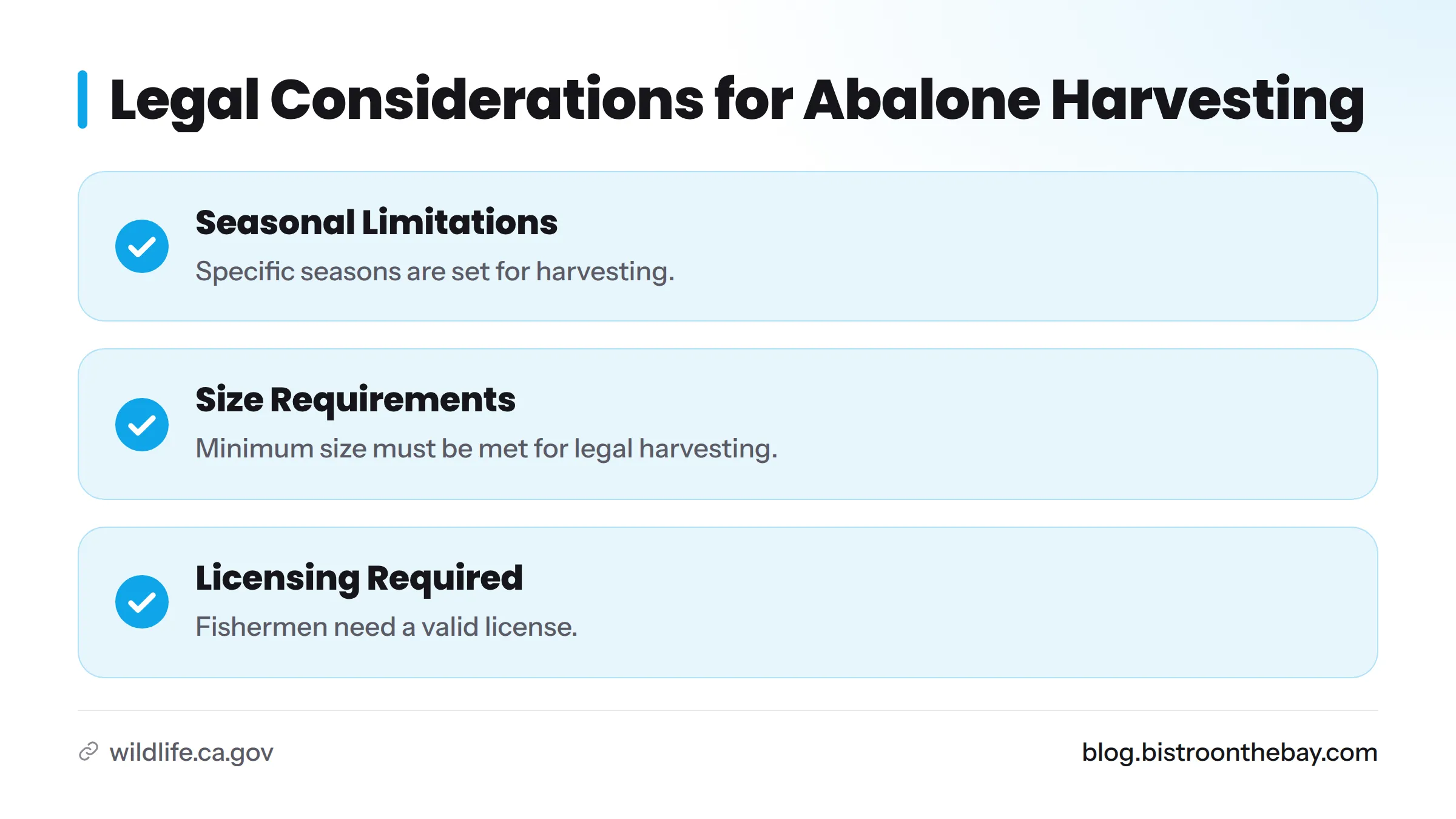
In California, strict regulations govern the harvesting of abalone to safeguard vulnerable populations:
- Seasonal Limitations: Specific harvesting seasons are instituted to protect the species.
- Size Requirements: Only abalone exceeding a certain minimum size can be legally harvested to maintain sustainable populations.
- Licensing: Fishermen must obtain a valid license and comply with regulations set by the California Department of Fish and Wildlife (CDFW) to legally catch abalone.
For additional details, visit the CDFW website.
Serving and Preparing Abalone
Abalone can be enjoyed in various preparations, appealing to both traditional and creative culinary uses.
Recipe Ideas
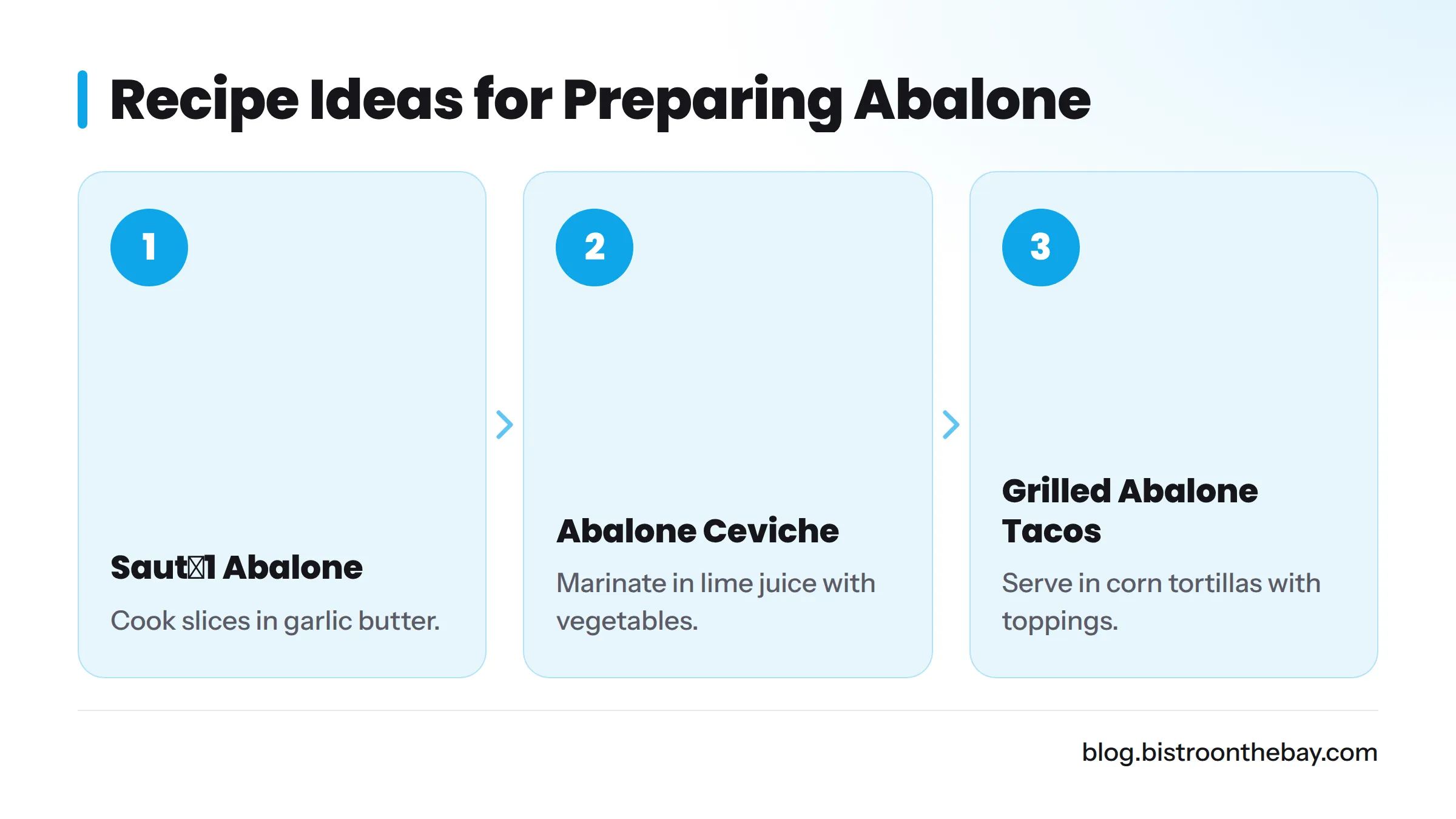
- Sautéed Abalone with Garlic Butter: Lightly sauté abalone slices in garlic butter for a simple yet flavorful dish.
- Abalone Ceviche: Marinate raw abalone slices in lime juice with chopped cilantro, onions, and tomatoes.
- Grilled Abalone Tacos: Grill marinated abalone and serve it in corn tortillas topped with fresh ingredients.
Pairing Suggestions
- Wines: Opt for a light Chardonnay or crisp Pinot Grigio to complement the richness of abalone.
- Sides: Pair with fresh salads or grilled vegetables for a well-rounded meal.
Frequently Asked Questions
- What is abalone? Abalone is a marine mollusk renowned for its edible meat and distinctive shell.
- How does abalone taste? It has a tender, rich flavor with sweet and umami notes.
- Is abalone a type of shellfish? Yes, it is classified as a shellfish, specifically a marine snail.
- Can you eat abalone raw? Absolutely, abalone is commonly used in sushi or sashimi.
- How do you prepare abalone? Preparation methods include sautéing, grilling, and serving raw in ceviche.
- What are the legal considerations for consuming abalone? California regulations require licenses, seasonal restrictions, and size limits on harvesting.
- Where can I source abalone responsibly? Look for suppliers committed to sustainable fishing practices.
- How does abalone compare to other seafood? Abalone's unique texture and flavor distinguish it from other shellfish like scallops.
- What types of abalone are best for cooking? Red abalone is highly regarded for its flavor and size.
- Are there sustainability concerns regarding abalone? Yes, existing regulations aim to protect abalone populations due to ecological impacts from overfishing.
Explore our culinary options at Blue Sky Bistro and savor the fresh flavors of our sustainably sourced seafood.
Sources
- California Department of Fish and Wildlife
- What Is Hamachi? Taste & Common Preparations
- Top Seafood Dishes in Morro Bay to Savor
- Why is abalone so expensive?
- History of Abalone in Monterey, California Learn more about our commitment to sustainability and exquisite seafood dishes at Blue Sky Bistro.